SealsDigital Studio
Create your own stamp © sealsdigital.com
PreviewStamp size · 38 mm
Loading...
Select ElementSelect Element
Date stamp maker
Browse and select professional seal templates related to Date stamp maker

SealsDigital Date Stamp Starting Layout — #4315222

Editable Date Stamp for the SealsDigital Digital Stamp Creator — #0898833

SealsDigital Round Date Stamp Design — #0925870
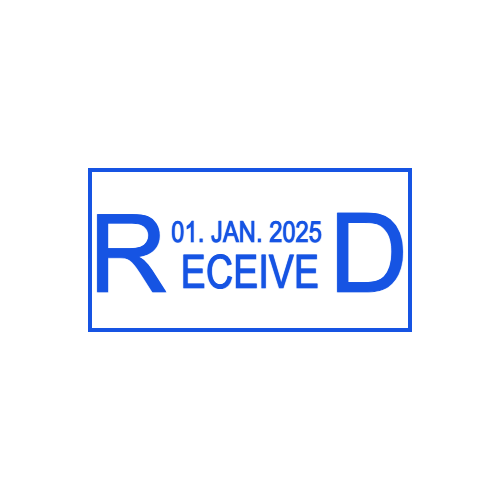
Editable Date Stamp for the SealsDigital Stamp Maker — #1581162
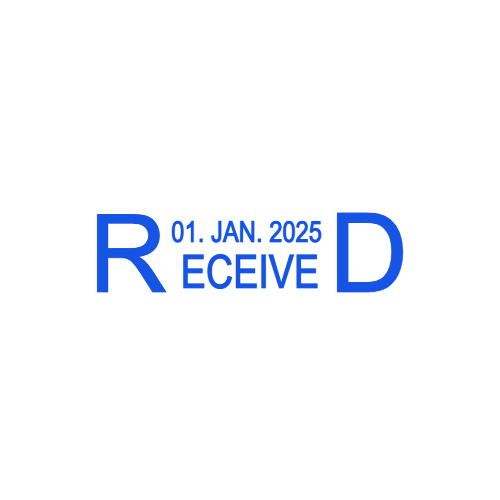
Editable Date Stamp for the SealsDigital Online Stamp Maker — #1598475
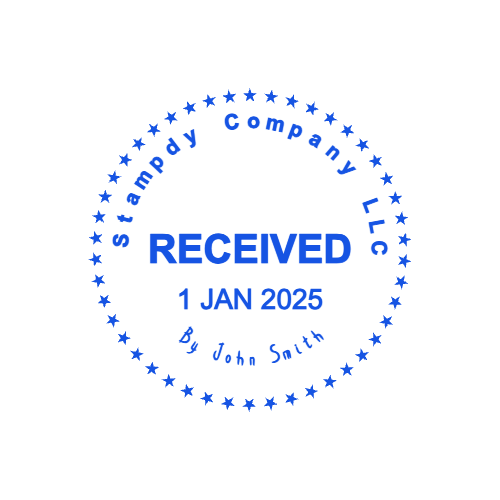
Create a Date Stamp Online with SealsDigital — #2335240
Showing 1 - 6 of 6 templates
Browse Other Categories
A date stamp transforms handwritten dates into consistent, legible impressions—saving time and eliminating confusion across every document you touch. Whether managing business paperwork, medical records, library loans, or personal files, the right date stamp streamlines your process and creates an unmistakable paper trail. Need a fast way to configure layouts? Start with the to tailor bands, fonts, and companion text before production.
A date stamp is a handheld or desktop tool that imprints the day, month, and year onto paper or similar materials. Many models let you adjust bands to set the exact date, and some include text plates for labels like “Received” or “Approved.” By standardizing date formats, these stamps prevent the inconsistencies and errors common with handwritten entries.
Manual dates vary by writer—different formats (MM/DD/YY, DD/MM/YYYY, “Aug 27, 2025”) can muddle records. A date stamp:
- Ensures uniformity: Every impression follows the same format, reducing sorting errors and lookup time.
- Speeds tasks: A single press stamps in seconds—handwriting dozens of dates takes precious extra minutes.
- Reduces fatigue: Office workers avoid repetitive pen strokes, lightening the load on hands and wrists during busy days.
Date stamps prove invaluable across industries and personal activities:
- Small Businesses & Office Managers stamp invoices as “Received” and “Paid” with dates to track billing cycles and payment status.
- Medical & Dental Clinics mark patient charts, prescriptions, and lab results to maintain chronological records for treatment and compliance.
- Libraries & Schools use date stamps for due dates, checkout logs, homework submissions, and permission slips—keeping materials and approvals on schedule.
- Legal & Financial Firms imprint court filings, contracts, tax forms, and audit documents to verify deadlines and maintain client records.
- Compliance leads can reinforce audit controls with frameworks from the overview.
- Individuals organize personal files (bills, insurance papers), scrapbook memories with photo dates, and label hobby collections with acquisition dates.
Several formats cater to varying volumes, precision needs, and convenience levels:
- Self-Inking Date Stamps
Feature a built-in ink pad that automatically re-inks between impressions. Ideal for high-frequency use (20+ stamps daily) in busy offices or clinics, they deliver up to 10,000 clean impressions per pad. - Pre-Inked Date Stamps
Embed ink directly into a polymer die, producing up to 50,000 crisp, smudge-free impressions before refill. Their slim profile and long life suit large mailrooms or accounting departments handling hundreds of documents weekly. - Traditional Rubber Date Stamps
Pair a rubber die with a separate ink pad. Affordable and flexible—ink colors are easily swapped—they’re best for occasional use (fewer than 10 stamps per day) in small shops or for personal filing. - Digital Date Stamps
Software-based stamps embed dates and text into electronic documents. Perfect for paperless workflows, they let you auto-fill dates across PDFs or digital forms, eliminating the need for physical tools. - Adjustable vs. Fixed-Date
- Adjustable stamps let you manually rotate date bands for daily changing.
- Fixed-Date stamps bear a single, unalterable date for one-off events like conferences, ensuring consistent event labeling.
Choosing the ideal model comes down to five key factors:
1. Frequency of Use
- Under 100 stamps/month: Traditional rubber stamps offer a cost-effective solution.
- 100–1,000 stamps/month: Self-inking models balance speed and durability.
- Over 1,000 stamps/month: Pre-inked stamps minimize downtime with fewer refills.
2. Preferred Date Format
Decide on MM/DD/YYYY, DD/MM/YYYY, or another style. Confirm the stamp supports your chosen format—some models allow format swaps, while others lock you into one style.
3. Need for Extra Text
Determine if you require phrases like “Received,” “Approved,” or custom labels (“Processed by Name”). A “dater with text” combines date and label in one impression, saving an extra stamping step.
4. Size and Placement
- Small stamps (1–1.5″ wide) fit envelope corners and invoice headers.
- Medium stamps (2–2.5″ wide) suit forms, spreadsheets, and report covers.
- Large stamps (3″+) stand out on boxes, certificates, and thick documents.
Measure the stamping area before deciding dimensions to ensure the date doesn’t overlap other text or margins.
5. Ink Color Preferences
- Professional documents: Black or blue for clarity and formality.
- Color-coding systems: Red for urgent or late, green for approved or on-time, or other hues to match branding or workflow design.
- Creative uses: Bright colors (purple, teal) add flair to crafts, scrapbooks, and event decor. Want more palette ideas and legibility tips? Browse to inspire color choices that pop without sacrificing readability.
- Flat Surface: Always stamp on a firm, level desk or stamping block to avoid uneven impressions.
- Alignment Tools: Use registration guides, grids, or masking tape frames to ensure each date lands in the exact spot.
- Consistent Pressure: Press down evenly—too hard can cause ink bleeding, too light yields faint marks.
- Test on Scrap: Before marking important documents, stamp on scrap paper to verify date bands and ink quality.
- Self-Inking & Pre-Inked: Replace pads or refill ink before impressions fade. Most pads exceed 10,000 impressions; pre-inked dies can last up to 50,000.
- Rubber Stamps: Clean the die surface with a lint-free cloth soaked in rubbing alcohol when switching ink colors.
- Storage: Keep stamps upright in cool, dry places; avoid direct sunlight or heat that can warp mounts and dry out ink.
- Routine Cleaning: Wipe away dried ink after heavy use to prevent clogged date bands.
- Layered Impressions: Pair your date stamp with logo or signature stamps to build multi-element imprints in a single workflow.
- Invisible Inks: Use UV-reactive stamp inks for security or tamper-evident applications—marks remain hidden until exposed under UV light.
- Portable Mini Stampers: Pocket-sized self-inking date stamps empower mobile teams—delivery drivers, field agents, or traveling auditors—to mark paperwork on the go.
- Digital Integration: Combine physical stamping with electronic date insertion in document management systems to maintain consistency across print and digital records.
Do digital date stamps eliminate the need for physical stamps?
Digital stamps excel in paperless environments but may not satisfy all legal or archival requirements. Many organizations use both—electronic stamps for PDFs and physical stamps for printed records.
Can I date-stamp non-paper materials?
Oil-based pre-inked and certain self-inking stamps work on coated surfaces, plastics, and light fabrics. Always test on a hidden area to confirm adhesion and drying time.
How often should I calibrate adjustable date bands?
Rotate the date bands daily before first use. Avoid skipping days to ensure accuracy—stamps set weeks in advance risk misdating documents.
What if my date stamp’s ink pad dries out?
Refill self-inking pads with compatible ink—never mix brands. For pre-inked stamps, apply 2–3 drops of manufacturer-recommended ink into the die, then restamp on scrap paper until the ink redistributes evenly.
A date stamp is a small investment that yields major organizational gains. By selecting the right type—self-inking, pre-inked, rubber, or digital—and following best practices for use and care, you’ll maintain clear, consistent records across every workflow. Whether tracking invoices, patient files, library loans, or personal archives, a quality date stamp keeps your documents on schedule and your processes running smoothly.
Ready to bring order to your paperwork? Explore custom date stamp options crafted to fit any format, volume, and setting—so you can stamp with confidence every time.
